
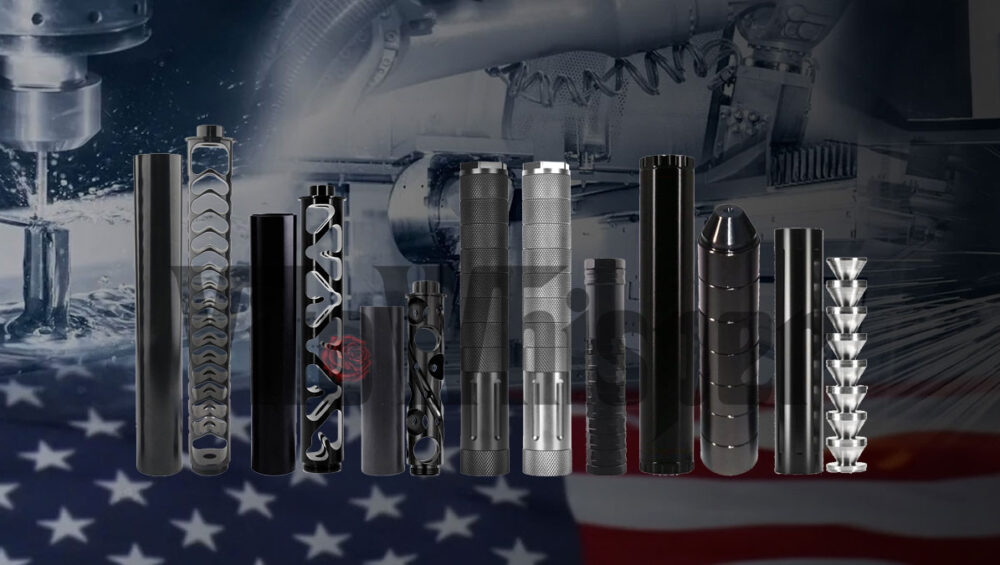
No. You do not need an ATF Form 1 to purchase or own a solvent trap when it is used solely as a firearm cleaning accessory. A solvent trap remains a legal, non-NFA item as long as it is left unmodified and used only to capture cleaning solvent and debris.
Form 1 becomes necessary only if you intend to modify the solvent trap into a suppressor (silencer). This guide explains the distinction clearly, outlines the legal process, and highlights important compliance points every firearm owner should know.
The Short Answer
- Buying a solvent trap for cleaning → No Form 1 required
- Owning and using it only for cleaning → No Form 1 required
- Modifying it into a suppressor → Approved Form 1 required before any modification
Why Form 1 Is Not Required for a Cleaning Solvent Trap
A solvent trap is designed and sold as a maintenance tool. Its purpose is to catch cleaning solvent, carbon, and patches as they exit the muzzle. As long as the device remains in its original configuration and is used only for that purpose, it does not meet the federal definition of a firearm silencer under the National Firearms Act (NFA).
Therefore, no registration, tax stamp, or Form 1 is needed simply to buy, possess, or use a solvent trap for cleaning.
When Form 1 Becomes Required
Form 1 (Application to Make and Register a Firearm) is required if you plan to redesign or modify a solvent trap so that it can silence, muffle, or diminish the report of a firearm. Once modified for that purpose, the device becomes an NFA-regulated silencer.
Critical rule: Do not make any modification until you have received an approved Form 1. Drilling, boring, or otherwise altering the device before approval is illegal and can result in serious federal charges.
Overview of the Form 1 Process (If You Intend to Make a Suppressor)
If your goal is a legal suppressor made from a solvent trap, the general federal process is:
Process for Filing Form 1 to Make a Suppressor
1. Buy the Solvent Trap
You can buy a solvent trap without needing to fill out any forms, provided you only intend to use it for firearm cleaning. If you plan to use it for a suppressor, you’ll need to file a Form 1 before you modify it.
2. Prepare the Necessary Documentation
To submit a Form 1 (Application to Make and Register a Firearm), you will need to gather the following documentation:
- Proof of U.S. Citizenship: You must be a U.S. citizen to legally make a suppressor.
- Photographs: You’ll need passport-style photos of yourself (usually two).
- Fingerprint Cards: You must provide fingerprint cards as part of the background check process.
3. Complete Form 1 Application
Form 1 can be submitted online via the ATF eForms website, or on paper. To complete the form, you’ll need to include:
- Description of the firearm (in this case, the solvent trap).
- Make: The manufacturer or your name (if you made it yourself).
- Model: The model of the solvent trap.
- Caliber or Gauge: This could be the bore size of your firearm.
- Serial Number: If you don’t yet have a serial number for your solvent trap, you must assign one to it.
4. Submit the Form 1 to the ATF
Once the form is filled out and all documents are prepared, submit the application online or via mail. The ATF recommends using their eForm system, as it’s faster and more efficient than submitting a paper application.
5. Pay the Tax Stamp
When submitting Form 1, you will be required to pay a $200 tax stamp fee. This fee is for the privilege of making and registering a suppressor (or other NFA-regulated device). The payment is typically done via credit card if applying online.
6. Wait for ATF Approval
Once submitted, the ATF will review your application and conduct a background check. This process can take several months—typically anywhere from 6 to 12 months—depending on the ATF’s workload and the method of submission (eForms tend to be faster than paper submissions). During this time, the ATF will ensure that you are legally allowed to create a suppressor.
7. Receive Your Approval and Tax Stamp
If your application is approved, you will receive an official ATF approval letter and your tax stamp in the mail. This process indicates that your solvent trap is now legally registered as a suppressor.
8. Modify the Solvent Trap into a Suppressor
Once you have the approved Form 1 and tax stamp, you are legally allowed to modify your solvent trap into a suppressor. At this point, you can install baffles, end caps, or other suppressor components to complete the modification.
Important Notes on Form 1 Process:
- Do not modify the solvent trap until you receive approval. It is illegal to possess an unregistered suppressor, even if it is in the process of being constructed. Modifying the trap before receiving approval could lead to legal consequences.
- Record Keeping: After receiving approval, keep your ATF approval letter and tax stamp with the suppressor at all times. Law enforcement may request to see proof of registration if they inspect your firearm.
- State-Specific Laws: Some states have additional restrictions on suppressors or firearm modifications. Before submitting Form 1, make sure that owning and modifying a suppressor is legal in your state. Even if federal law allows it, some states (e.g., California, New York, etc.) have stricter regulations.
If you plan to use your solvent trap only for cleaning firearms, Form 1 is not needed. The solvent trap remains a legal, non-NFA item as long as it is used for cleaning purposes and not modified into a suppressor.
By following this process and staying within the bounds of the law, you can legally own and use a solvent trap—whether it’s for its original purpose or after modifying it into a suppressor (with proper registration).
Recommended Solvent Traps for Legal Cleaning Use
If your only goal is mess-free firearm maintenance, choose a solvent trap designed and sold strictly as a cleaning tool. These options work well for that purpose:
1. Best Overall Modular Cleaning Kit
10″ Aluminum Modular Solvent Trap Kit — $129.99
- Adjustable capacity with dry storage cups
- Dual 1/2×28 and 5/8×24 thread protectors
- Lightweight and versatile for multiple firearms
2. Best Durability Option
10″ Stainless Steel Modular Solvent Trap Kit — $239.99
- 304 stainless steel construction
- High corrosion resistance for frequent cleaning
- Same modular flexibility and dual-thread convenience
3. Strong Value & Compact Choices
- 10″ Aluminum Solvent Trap with Dry Storage Cups — $92.99
- 6″ Monocore Solvent Trap Aluminum TypeA — $62.99
- 6″ Spiral Monocore Solvent Trap Aluminum — $62.99
Frequently Asked Questions
Do I need a Form 1 just to buy a solvent trap?
No. Purchasing a solvent trap for use as a firearm cleaning accessory does not require a Form 1 or any NFA registration.
When do I need a Form 1 for a solvent trap?
Only if you intend to modify the solvent trap into a suppressor. The approved Form 1 must be in hand before any modification is made.
Can I buy the solvent trap first and file Form 1 later?
You may purchase the solvent trap as a cleaning device. However, you must not modify it until the Form 1 is approved. Modifying first is illegal.
Is the $200 tax stamp still required?
Tax stamp rules have changed in recent years. Always verify the current ATF requirements on the official eForms website, as fees and procedures can be updated.
Do state laws affect this?
Yes. Some states prohibit civilian ownership of suppressors even with federal approval. Always check your state and local laws before considering any NFA item.
What is the safest way to use a solvent trap?
Use it exclusively for capturing cleaning solvent and debris. Leave it unmodified and follow all applicable federal, state, and local regulations.
Final Takeaway
You do not need a Form 1 to buy or own a solvent trap for legal firearm cleaning. Form 1 is required only if you plan to turn the device into a suppressor, and approval must come before any modification.
Responsible owners who keep the solvent trap in its original configuration and use it solely for maintenance stay on the correct side of federal law. When in doubt, consult the official ATF resources or a qualified firearms attorney.